Ayurvedic Treatment for Diabetes: Restoring Balance Beyond Blood Sugar
Diabetes is one of the most widespread lifestyle disorders of our time, and for most patients, managing it feels like a lifelong balancing act of medication, diet, and monitoring. At Dr. Narkhede Ayurved & Panchkarma Clinic, we often meet patients looking for something more — a way to support their body’s own regulatory systems, not just manage numbers on a glucometer. Ayurveda offers exactly that: a systemic, root-cause approach that has been refined over thousands of years.
Understanding Diabetes the Ayurvedic Way: What Is Madhumeha?
In classical Ayurvedic texts, diabetes is known as Madhumeha, and it is classified among the twenty types of Prameha (urinary disorders). It is directly linked to poor lifestyle choices, excess Kapha dosha, and impaired Agni (digestive fire).
What sets the Ayurvedic understanding apart is its scope. Ayurveda views diabetes not merely as a blood sugar issue, but as a systemic breakdown in metabolic regulation — one that affects digestion, tissue nourishment, and the body’s ability to process nutrients at every level. This is why an isolated focus on blood sugar numbers often falls short of addressing the full picture, and why our approach at Dr. Narkhede Ayurved & Panchkarma Clinic looks at the person as a whole.
The Role of Panchakarma in Diabetes Management
Panchakarma plays a supportive role alongside conventional diabetes management — it is designed to work in partnership with your existing medical care, not in place of it. Depending on your individual constitution and current health status, our physicians may recommend a combination of the following therapies:
Virechana (Therapeutic Purgation)
Virechana helps eliminate accumulated toxins (Ama) that interfere with insulin sensitivity. By clearing these toxins from the digestive tract, this therapy supports the body’s underlying metabolic function, which is often compromised long before blood sugar levels rise.
Basti therapy nourishes and balances Vata dosha, which governs both the nervous system and pancreatic function. Since Vata plays a central regulatory role in the body, correcting its imbalance is considered essential to restoring healthy glucose metabolism over time.
Udvartana (Herbal Powder Massage)
Udvartana, a vigorous massage using dry herbal powders, can help reduce excess fat that contributes to insulin resistance. This therapy is particularly useful for patients whose diabetes is closely linked to excess body weight.
As with all Panchakarma protocols, these therapies are administered only after a detailed assessment of your health history, current medications, and dosha constitution — diabetes management requires especially careful, individualized planning.
Herbal Support for Healthy Glucose Metabolism
Ayurveda has a long tradition of using specific herbs to support healthy blood sugar levels. At our clinic, we commonly incorporate:
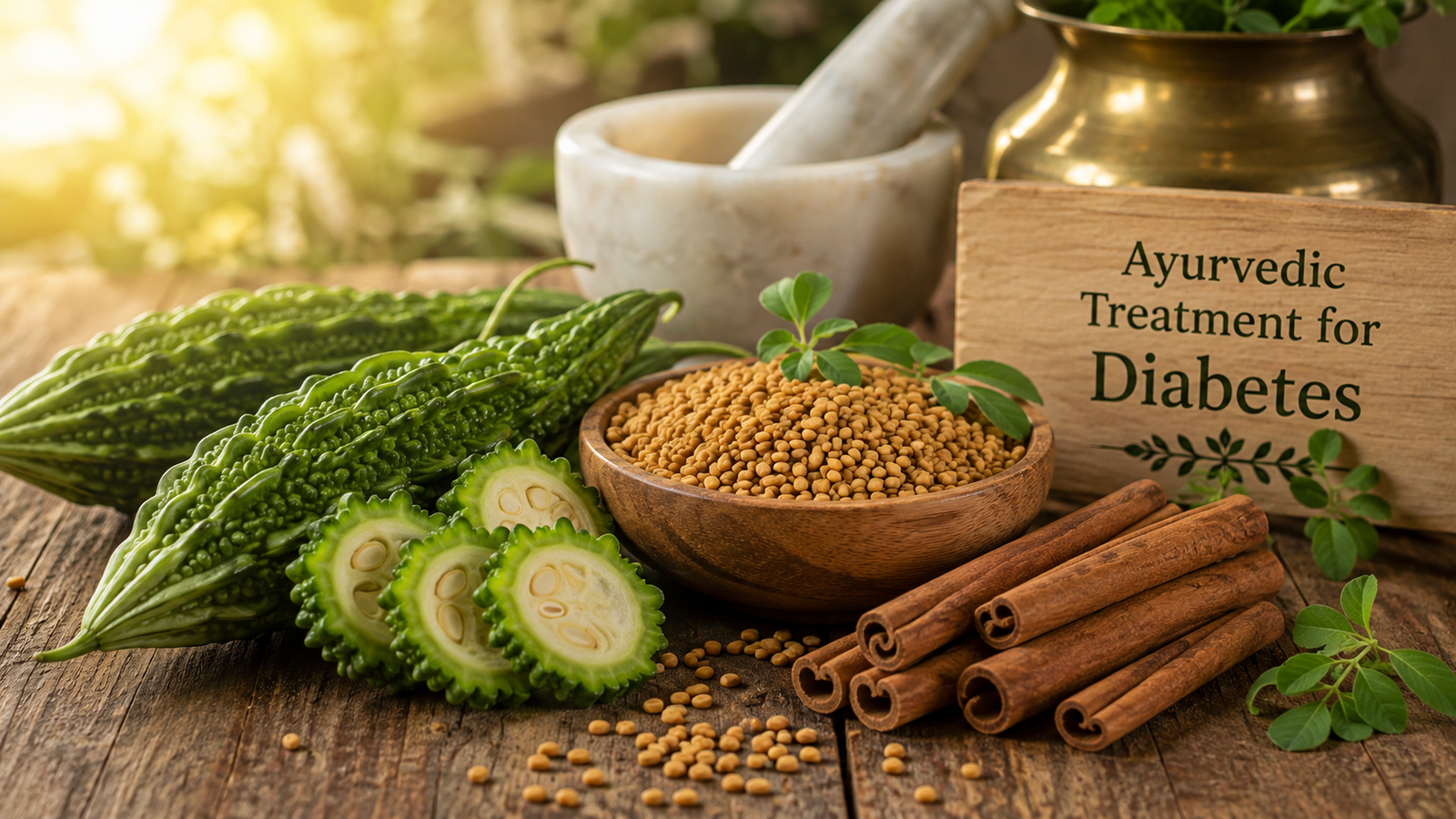
- Karela (Bitter Gourd) — widely valued for supporting healthy glucose metabolism
- Jamun Seed Powder — traditionally used to support pancreatic function
- Methi (Fenugreek) — known to support insulin sensitivity
- Neem — supports overall metabolic and digestive health
- Gudmar (Gymnema sylvestre) — literally translating to “sugar destroyer,” this herb is a cornerstone of Ayurvedic diabetes care
These herbs are typically combined into personalized formulations based on the individual’s dosha constitution — we do not believe in a generic, one-size-fits-all herbal protocol, and your formulation will be tailored specifically to you.
Dietary Guidance for Stable Blood Sugar
Diet is one of the most powerful tools in managing Madhumeha. Our dietary guidance for diabetes patients typically emphasizes:
- Low-glycemic, fiber-rich foods that release glucose slowly into the bloodstream
- Avoiding refined sugar and heavy, oily meals, which aggravate Kapha and burden digestion
- Eating at consistent times each day to stabilize digestion and support the body’s natural metabolic rhythm
These aren’t temporary dietary restrictions — they’re sustainable shifts designed to work alongside your body’s needs for the long term.
Movement and Yoga for Better Glucose Control
Physical activity is a cornerstone of Ayurvedic diabetes management. We commonly recommend:
- Regular walking after meals, which helps regulate post-meal blood sugar spikes
- Kapalbhati, a breathing practice believed to improve circulation and stimulate abdominal organs
- Vakrasana, a seated twisting yoga posture believed to support pancreatic activity
These practices are simple enough to build into a daily routine, yet consistent enough over time to meaningfully support your metabolic health.
A Complementary, Not Alternative, Approach
It’s important to note that Ayurvedic treatment for diabetes should complement, not replace, prescribed medical care. Diabetes is a serious condition that requires consistent monitoring, and any changes to medication should only ever be made in consultation with your treating physician.
At Dr. Narkhede Ayurved & Panchkarma Clinic, we believe the most balanced, safe approach to long-term blood sugar management comes from working with both an endocrinologist and a qualified Ayurvedic practitioner — combining the strengths of modern diagnostics with the depth of Ayurveda’s systemic, root-cause healing.
Take the Next Step Toward Balanced Health
If you’re looking to support your diabetes management with a personalized, root-cause approach, our team at Dr. Narkhede Ayurved & Panchkarma Clinic is here to help — always in coordination with your existing medical care.
Ready to explore Ayurvedic support for your diabetes management? Book a consultation with our Ayurvedic physicians today.