ayurvedic treatment for premature graying

Ayurvedic Treatment for Premature Graying

Ayurvedic Treatment for Premature Graying: Understanding Palitya and How Panchakarma Supports Healthy Hair Pigmentation

Spotting the first gray strands in your twenties or early thirties can be unsettling, and more patients are walking into my clinic with this exact concern every year. Many assume it’s purely genetic and that nothing can be done. While genetics certainly play a part, Ayurveda takes a broader view. We call premature graying Palitya, and in our understanding it is often linked to far more than heredity alone — chronic stress, poor nutrition, and internal heat all play meaningful roles in how early hair loses its natural color.
The Ayurvedic Root Cause of Premature Grayingjirna: Why Digestion Falters

In Ayurveda, excess Pitta dosha is considered the primary driver of premature graying. Pitta represents the body’s fire and metabolic heat, and when it becomes aggravated, that internal heat affects the delicate pigment-producing cells within the hair follicle, gradually impairing their ability to maintain natural color.

I also explain to patients that Pitta rarely acts alone here. Poor digestion, mineral deficiencies, and chronic stress are all seen as aggravating factors that worsen the heat and further deprive the follicles of the nourishment they need. This is why I always ask about digestion, sleep, work pressure, and eating habits during a Palitya consultation — the answers often reveal more about the graying than the hair itself does.

The Panchakarma Approach I Recommend

Because the root issue is internal heat and systemic imbalance, I design the treatment plan around cooling Pitta and nourishing the head and scalp region.

Virechana This is the main therapy I use to cool excess Pitta and address graying at its metabolic root. By clearing accumulated heat and toxins through therapeutic purgation, Virechana works on the underlying cause rather than just the visible strands.

Shirodhara A continuous stream of warm medicated oil poured over the forehead calms the nervous system and helps reduce the stress hormones linked to accelerated graying. Patients often tell me this is the therapy they look forward to most, and clinically it addresses one of the most overlooked contributors to early graying.

Shiroabhyanga Regular scalp massage with Bhringraj or Amla oil is believed to nourish the hair follicles and support natural pigmentation. Consistency matters here — it’s a simple practice, but its benefits build over time.

Nasya Medicated oil administered through the nasal passage supports overall head and scalp nourishment via the nasal-cranial channel, complementing the other therapies in the protocol.

Herbs for Hair Pigmentation

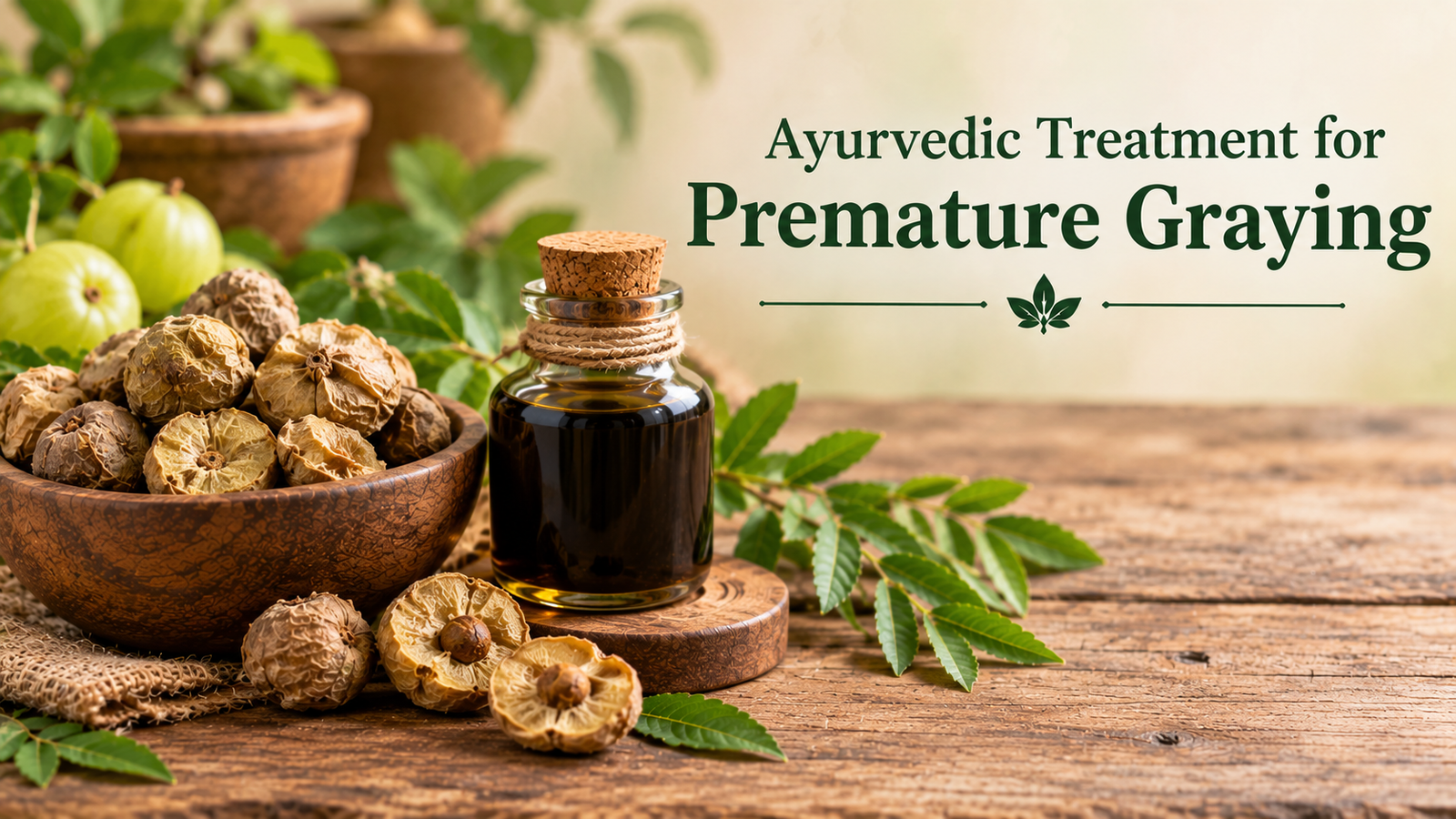
Alongside Panchakarma, I recommend a handful of time-honored herbs and foods: amla, bhringraj, black sesame seeds, and curry leaves. These are traditional Ayurvedic remedies believed to support melanin production in the hair, and I often encourage patients to include them in their daily routine both internally and as part of their oil-based hair care.

Diet & Lifestyle Guidance

Diet plays a major supporting role in managing Palitya. I advise a Pitta-pacifying diet rich in cooling foods, along with adequate intake of copper and iron-rich foods, which are important for healthy pigmentation. Equally important is managing stress through yoga and meditation — in my experience, patients who address stress alongside their treatment see noticeably better results than those who rely on therapies alone.

Setting Realistic Expectations

I believe in being honest with patients: Ayurveda cannot reverse genetic graying. However, a Panchakarma-based, Pitta-balancing approach may help slow the process and improve overall hair health, strength, and quality — and for many patients, that is a meaningful and worthwhile outcome.

If premature graying is a concern for you, I’d encourage you to look at it as a signal from your body rather than a purely cosmetic issue. Book a consultation at Dr. Narkhede Ayurved & Panchkarma Clinic, and let’s build a plan around your individual constitution.
ayurvedic treatment for indigestion

Ayurvedic Treatment for Indigestion

Ayurvedic Treatment for Indigestion — Understanding and Healing Ajirna

Have you ever finished a meal only to feel heavy, sluggish, and strangely tired, as if your body is working overtime just to process what you ate? That uncomfortable, weighed-down feeling is what Ayurveda calls Ajirna, or indigestion. It happens when Agni, your digestive fire, is too weak to process food properly. The result is heaviness, discomfort, and fatigue after eating. Ayurvedic treatment for indigestion works by reigniting this digestive fire naturally, rather than simply masking the discomfort with a quick fix.

Understanding Ajirna: Why Digestion Falters

In Ayurveda, Agni is the foundation of good health. When it burns strong and steady, food is broken down efficiently, nutrients are absorbed well, and the body feels light and energetic. But when Agni weakens, whether from overeating, irregular meals, stress, or heavy and cold foods, food remains partially digested. This undigested food can turn into Ama (toxic residue), which further dampens digestion and creates a cycle of discomfort. Breaking this cycle is the central goal of any effective ayurvedic treatment for indigestion.

Signs of Weak Digestion

Ajirna doesn’t always announce itself dramatically. Often, it shows up through subtle but persistent signals. The classic symptoms include:

  • Heaviness after meals, a feeling that food is sitting like a stone in your stomach
  • Burping, often frequent and sometimes sour or tasteless
  • Lack of appetite, even when it’s been hours since you last ate
  • Lethargy, a drop in energy or drowsiness after eating

If you recognize these signs regularly, it’s a clear signal that your Agni needs support.

Key Remedies for Indigestion

Ayurveda offers a collection of simple, time-tested remedies, many of which are already in your kitchen. These form the heart of ayurvedic treatment for indigestion:

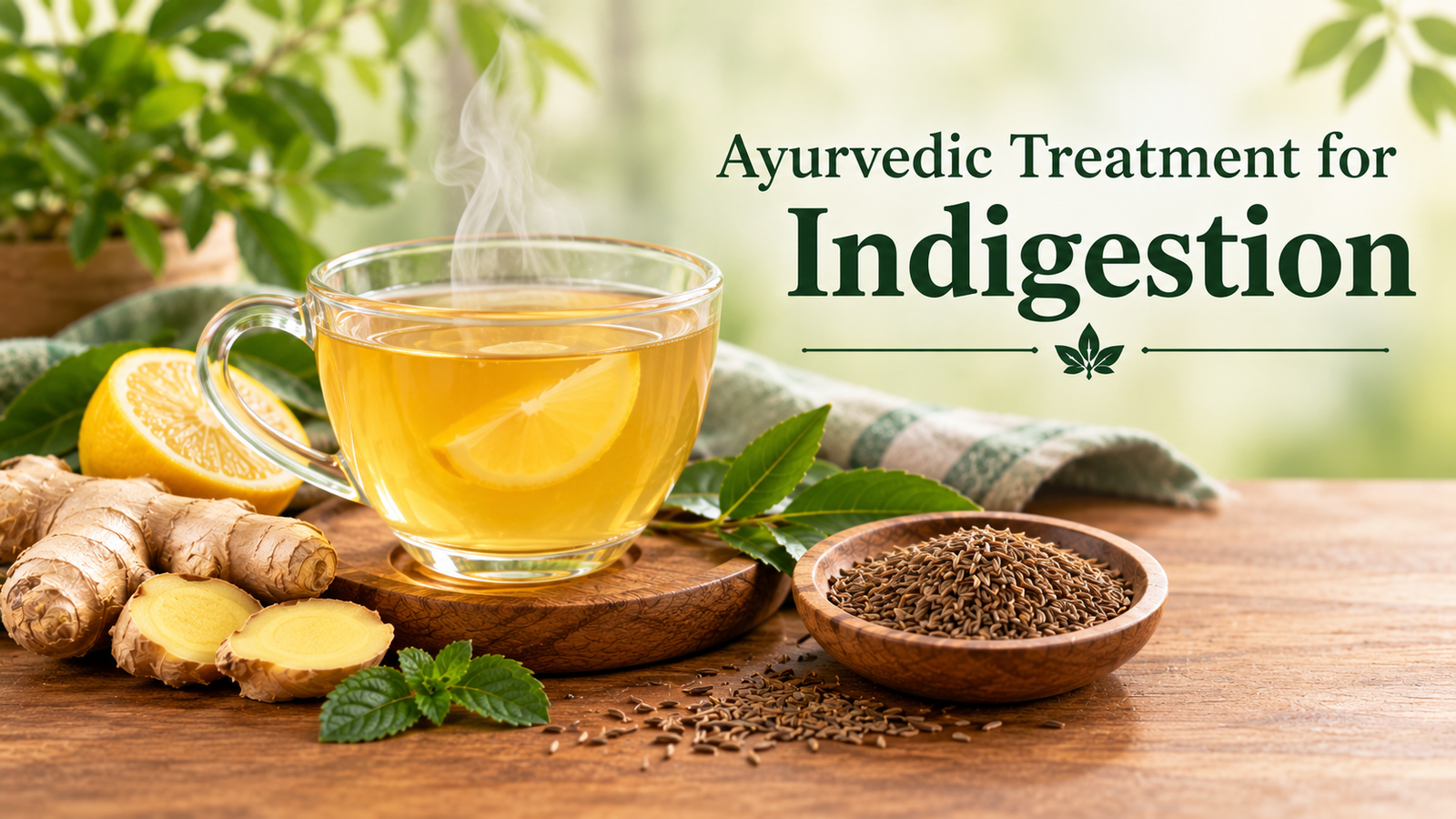
  • Ginger with rock salt: Eaten about 10-15 minutes before meals, this classic combination kick-starts digestive enzymes and prepares the stomach for food.
  • Trikatu: A time-tested herbal blend of ginger, black pepper, and long pepper that boosts Agni and helps clear sluggish digestion.
  • Buttermilk (Chaas) with cumin and black salt: An excellent digestive after lunch, it’s light, probiotic-rich, and supports smooth digestion.
  • Warm water throughout the day: Sipping warm water supports Agni far better than cold beverages, which tend to dampen digestive fire.
  • Hingvashtak Churna: A classical formulation commonly used for indigestion and gas together, especially helpful when heaviness is accompanied by bloating.

Diet Recommendations to Support Agni

Remedies work best alongside the right eating habits. Ayurveda recommends:

  • Favoring light, freshly cooked, warm meals over heavy, fried, or reheated food, which are much harder for weak Agni to process.
  • Avoiding overeating. Ayurveda suggests filling the stomach to only about three-quarters of its capacity, leaving room for digestion to happen comfortably.
  • Keeping meal timings regular, since a consistent rhythm helps Agni stay steady and predictable.

Lifestyle Tip: Mind Your Mood While Eating

One of Ayurveda’s most distinctive insights is that digestion isn’t just physical. Never eat when stressed or upset, as emotional disturbance directly weakens Agni. Anger, anxiety, and worry can all interfere with digestion just as much as heavy food can. Taking a few calm breaths before a meal, sitting down without distractions, and eating in a peaceful setting can make a surprising difference in how well your body digests.

The Takeaway

Indigestion may feel like an everyday nuisance, but it’s your body’s way of telling you that Agni needs attention. With mindful eating habits and the right herbal supports, the heaviness, burping, and fatigue can be resolved naturally. By following consistent ayurvedic treatment for indigestion, you can restore your digestive strength, bringing back energy and comfort after every meal.

If symptoms are severe, persistent, or accompanied by pain, vomiting, or weight loss, consult a qualified Ayurvedic physician or doctor for a personalized evaluation.