Uncategorized

Ayurvedic Treatment for High Blood Pressure

Ayurvedic Treatment for High Blood Pressure: Calming the System, Not Just the Numbers

Hypertension, or high blood pressure, has become alarmingly common due to chronic stress, poor sleep, excessive salt intake, and a fast-paced lifestyle. Many patients we see at Dr. Narkhede Ayurved & Panchkarma Clinic are already on medication to manage their numbers, yet continue to feel the underlying tension, restlessness, and fatigue that come with living in a constant state of high alert. Ayurveda offers a way to address that deeper imbalance — calming the system that drives the pressure up in the first place.

Understanding Hypertension the Ayurvedic Way

Ayurveda attributes hypertension primarily to an aggravation of Vata and Pitta dosha, which disturbs the smooth flow of Prana (life force) through the circulatory channels, known as Srotas. When Vata becomes erratic and Pitta becomes excessive, this delicate flow is disrupted — manifesting as the physical pressure and restlessness so many hypertension patients describe.

This dosha-based understanding is why Ayurvedic treatment for high blood pressure doesn’t stop at the cardiovascular system alone. It looks at the nervous system, the mind, and the body’s overall rhythm — because in Ayurveda, all of these are intimately connected to how Prana moves through the body.

Panchakarma Therapies to Calm the Nervous System

At Dr. Narkhede Ayurved & Panchkarma Clinic, our Panchakarma therapies for hypertension focus on calming the nervous system and restoring balance, addressing the root disturbance rather than just the elevated reading.

Shirodhara

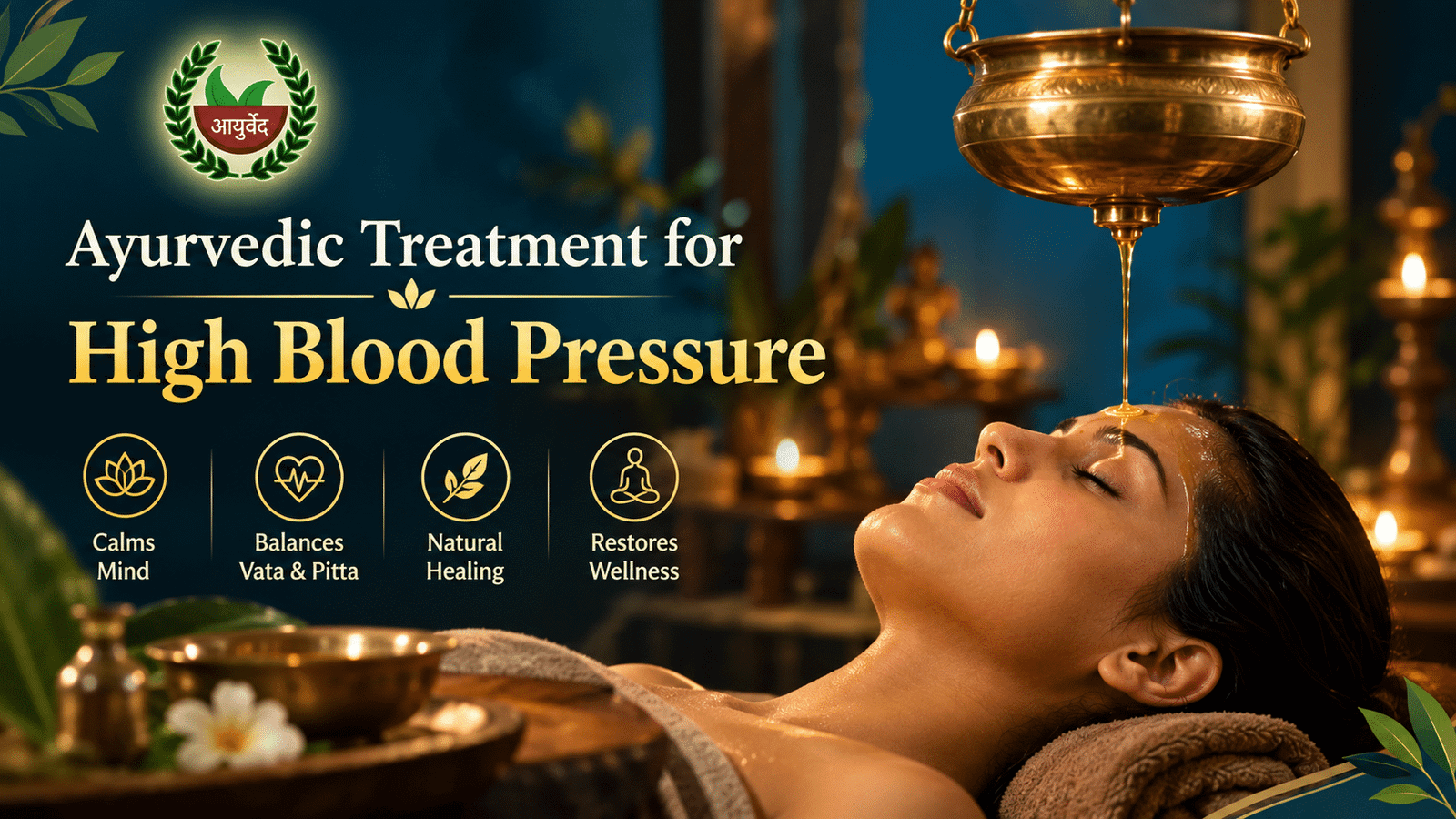
Shirodhara — a continuous stream of warm medicated oil poured over the forehead — is particularly renowned for reducing stress hormones and soothing an overactive mind. For many of our patients, this therapy provides a level of deep relaxation that directly benefits blood pressure, as the constant mental chatter and background stress response begin to settle.

Basti (Medicated Enema)

Basti helps pacify Vata at its root in the colon. Since Vata governs movement throughout the body, including the rhythm of the circulatory system, correcting this imbalance at its source is considered essential to long-term blood pressure regulation.

Abhyanga (Oil Massage)

Gentle Abhyanga, a full-body warm oil massage, improves circulation and reduces the physical tension that so often accompanies chronic stress. This therapy is soothing to both the body and the mind, making it a valuable complement to Shirodhara and Basti.

These therapies are administered only after a careful evaluation of your current blood pressure levels, medication, and overall cardiovascular health — hypertension requires particularly attentive, individualized care.

Herbs for Cardiovascular and Mental Balance

Ayurveda has long relied on specific herbs to support both heart health and mental calm. At our clinic, we commonly work with:

  • Sarpagandha — traditionally used to support calm and healthy blood pressure levels
  • Arjuna Bark — well regarded in Ayurvedic cardiology for strengthening the heart muscle
  • Ashwagandha — supports the body’s resilience to stress
  • Brahmi — traditionally valued for calming the mind and supporting mental clarity

Of these, Arjuna holds a particularly respected place in Ayurvedic cardiology, and is often a foundational herb in formulations designed to support long-term cardiovascular strength.

Lifestyle Changes to Support Healthy Blood Pressure

Alongside Panchakarma and herbal support, lasting change requires consistent lifestyle correction. We typically recommend:

  • Reducing salt and caffeine intake, both of which can directly aggravate Pitta and Vata
  • Practicing Pranayama, particularly Anulom Vilom (alternate nostril breathing), to calm the nervous system
  • Maintaining consistent sleep timing, which helps regulate the body’s natural rhythms
  • Avoiding excessive screen time before bed, which can overstimulate the mind and disturb rest

Meditation and gentle yoga are also strongly encouraged, as they help manage the emotional stress that so often underlies chronic hypertension. For many patients, these practices become just as important as any herb or therapy in maintaining long-term balance.

A Careful, Physician-Guided Approach

As with all cardiovascular conditions, Ayurvedic care should be pursued alongside regular monitoring by a physician, with any herbal or Panchakarma protocol tailored by a qualified practitioner. Hypertension can carry serious risks if left unmanaged, and we always encourage our patients to continue their prescribed medical care while working with us on complementary, root-cause support.

Begin a Calmer Approach to Blood Pressure Management

If you’re looking for a way to support your blood pressure management that goes beyond medication alone — one that addresses stress, circulation, and the mind together — our team at Dr. Narkhede Ayurved & Panchkarma Clinic is here to help, always in coordination with your treating physician.

Chaitali

Share
Published by
Chaitali

Recent Posts

Ayurvedic Treatment for Eczema

Ayurvedic Treatment for Eczema: Understanding Vicharchika and How Panchakarma Brings Lasting Relief Few skin conditions…

20 hours ago

Osteoarthritis Ayurvedic Treatment

Osteoarthritis Ayurvedic Treatment: Restoring Joint Health Naturally Osteoarthritis (OA) is a degenerative joint condition caused…

3 weeks ago

Ayurvedic treatment for Dandruff

Ayurvedic Treatment for Dandruff: Understanding Darunaka and How Panchakarma Restores Scalp Balance Persistent white flakes…

3 weeks ago

Ayurvedic treatment for Bloating and Gas

Ayurvedic Treatment for Bloating and Gas — Say Goodbye to Discomfort That tight, heavy feeling…

4 weeks ago

Ayurvedic treatment for Psoriasis

Ayurvedic Treatment for Psoriasis: A Root-Cause Approach with Panchakarma Psoriasis is one of the most…

4 weeks ago

Ayurvedic treatment for Diabetes

Ayurvedic Treatment for Diabetes: Restoring Balance Beyond Blood Sugar Diabetes is one of the most…
1 month ago