Uncategorized

Ayurvedic treatment for Dandruff

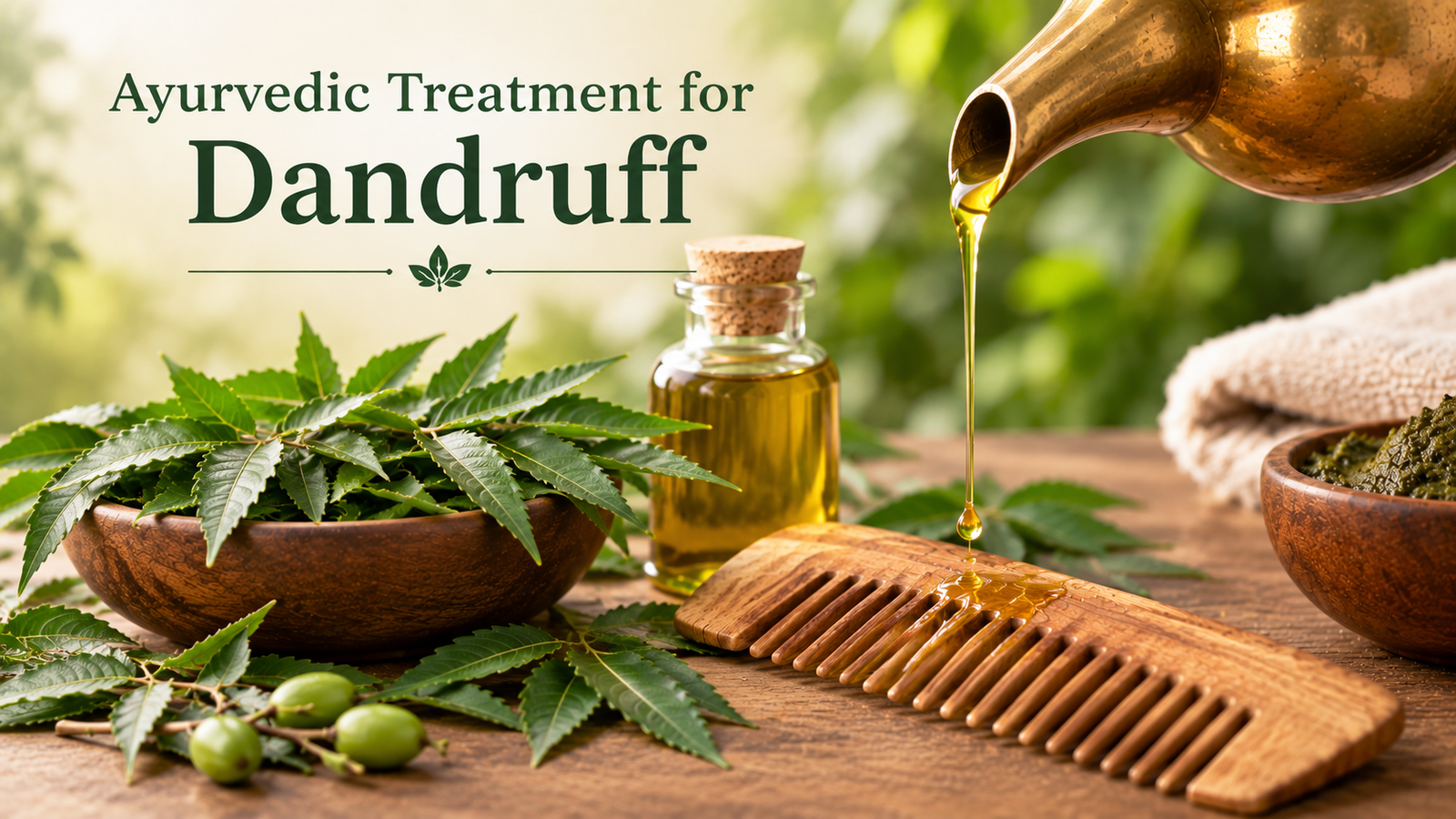
Ayurvedic Treatment for Dandruff: Understanding Darunaka and How Panchakarma Restores Scalp Balance

Persistent white flakes and an itchy scalp — what Ayurveda calls Darunaka — are one of the most common complaints I hear in clinic, and one of the most misunderstood. Most patients arrive having cycled through three or four anti-dandruff shampoos, frustrated that the flaking always returns within weeks of stopping. I tell them the same thing every time: dandruff is more than a cosmetic annoyance. It’s a sign that something in the scalp’s oil production and skin renewal process has fallen out of balance — and no shampoo, however strong, can correct that on its own.

The Ayurvedic Understanding of Dandruff

In Ayurvedic terms, dandruff results from vitiated Kapha and Vata doshas affecting the sebaceous glands of the scalp. This is why I always ask patients to describe their flakes carefully, because the presentation tells me which dosha is dominant. Vata-type flaking tends to be dry, fine, and accompanied by a tight, itchy scalp. Kapha-type flaking, on the other hand, is oilier, with larger, clumpier flakes and a scalp that feels congested rather than dry. In both cases, poor scalp hygiene and stress tend to accelerate the condition, which is why I look at lifestyle just as closely as I look at the scalp itself.

Panchakarma Solutions I Recommend

Once I’ve identified which dosha is driving a patient’s dandruff, I build a Panchakarma-based protocol around it rather than defaulting to a single generic treatment.

Shiroabhyanga A warm oil scalp massage — typically with neem or bhringraj oil depending on the dosha involved — is usually the first therapy I introduce. It balances oil production at the source and soothes the irritation that makes patients reach for their nails in the first place.

Nasya For Kapha-dominant dandruff, I often add Nasya to the protocol. By clearing Kapha accumulation in the head region through the nasal passage, this therapy indirectly reduces the scalp congestion that feeds persistent, clumpy flaking.

Swedan (Localized Steam) Following oil massage, gentle localized steam opens the scalp’s pores, allowing the medicated oils to absorb more deeply rather than simply sitting on the surface. Patients are often surprised at how much more effective their oil treatments feel once steam is added to the routine.

Virechana For chronic, recurrent cases that keep coming back despite good scalp hygiene, I recommend Virechana. This internal detoxification therapy resets the underlying dosha imbalance driving the dandruff, rather than just managing the flakes on the surface month after month.

Herbal Remedies

Alongside these therapies, I rely heavily on a core group of herbs: neem, bhringraj, tea tree-infused herbal oils, and fenugreek (methi). Each has a role — neem and tea tree control the microbial and irritant factors, bhringraj nourishes the scalp and follicles, and fenugreek helps soothe inflammation and flaking when used as a paste or oil infusion.

Diet & Lifestyle Guidance

I always pair in-clinic treatment with practical daily changes. Reducing sugar and processed food intake, staying well hydrated, and switching from harsh sulfate shampoos to mild, herbal cleansers all make a measurable difference in how quickly the scalp stabilizes — and, more importantly, how long the results last.

Relief That Outlasts the Shampoo Bottle

Ayurvedic dandruff treatment through Panchakarma isn’t about a stronger anti-dandruff formula — it’s about rebalancing the scalp’s oil production naturally, at the level of the dosha imbalance actually causing the problem. That’s what allows the relief to outlast a one-time wash and hold up over the long term.

If dandruff keeps returning no matter what you’ve tried, I’d encourage you to look at it as a scalp-balance issue rather than a shampoo problem. Book a consultation at Dr. Narkhede Ayurved & Panchkarma Clinic, and let’s build a treatment plan suited to your scalp’s specific imbalance.

This content is for informational purposes only and is not a substitute for professional medical advice. Please consult Dr. Sagar Narkhede or a qualified Ayurvedic practitioner before beginning any Panchakarma therapy.

Chaitali

Share
Published by
Chaitali

Recent Posts

Osteoarthritis Ayurvedic Treatment

Osteoarthritis Ayurvedic Treatment: Restoring Joint Health Naturally Osteoarthritis (OA) is a degenerative joint condition caused…

6 days ago

Ayurvedic treatment for Bloating and Gas

Ayurvedic Treatment for Bloating and Gas — Say Goodbye to Discomfort That tight, heavy feeling…

2 weeks ago

Ayurvedic treatment for Psoriasis

Ayurvedic Treatment for Psoriasis: A Root-Cause Approach with Panchakarma Psoriasis is one of the most…

2 weeks ago

Ayurvedic treatment for Diabetes

Ayurvedic Treatment for Diabetes: Restoring Balance Beyond Blood Sugar Diabetes is one of the most…
3 weeks ago

Ayurvedic treatment for Arthritis

Ayurvedic Treatment for Arthritis: Natural Relief from Joint Pain Arthritis, known in Ayurveda as Sandhivata,…

4 weeks ago

Ayurvedic Treatment for Hair Fall

Ayurvedic Treatment for Hair Fall: Understanding Khalitya and How Panchakarma Restores Hair Health At my…

1 month ago