Uncategorized

Ayurvedic Treatment for Eczema

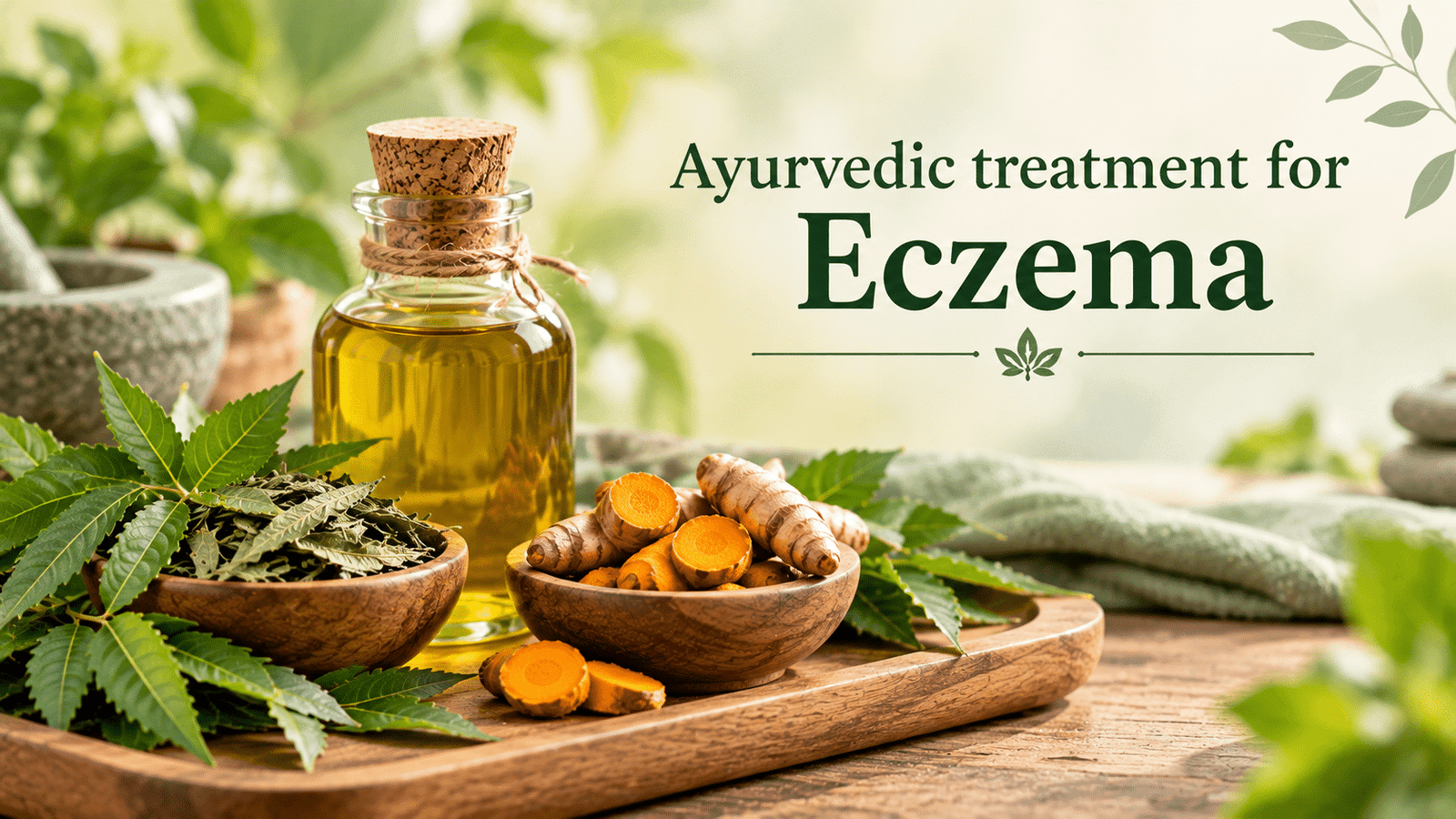
Ayurvedic Treatment for Eczema: Understanding Vicharchika and How Panchakarma Brings Lasting Relief

Few skin conditions wear on a patient’s daily life quite like eczema does. The relentless itching, redness, and oozing patches can disrupt sleep, chip away at confidence, and turn something as simple as wearing a favorite fabric into a source of discomfort. By the time most patients reach my clinic, they’ve already tried a rotation of moisturizers and steroid creams — treatments that calm the surface for a while but rarely stop the cycle from returning. In Ayurveda, we call this condition Vicharchika, and we approach it with a detox-based treatment philosophy that goes well beyond what’s applied to the skin.

Understanding Vicharchika in Ayurveda

I often walk patients through the Ayurvedic reasoning behind their own symptoms, because it tends to make the condition feel far less random. Eczema results from vitiated Kapha and Pitta doshas combined with toxin accumulation in the blood and lymphatic tissues. This combination explains the classic presentation almost perfectly: itching comes from Kapha, redness and burning come from Pitta, and the characteristic oozing discharge reflects the underlying toxic buildup disturbing the skin’s normal tissue balance. Once patients see how neatly their symptoms map onto this dosha pattern, the treatment plan starts to make intuitive sense.

Panchakarma Therapies for Eczema

Because Vicharchika involves both blood-level toxicity and dosha imbalance, I typically combine internal detoxification with targeted external therapies.

Virechana This purgation therapy purifies the blood and pacifies aggravated Pitta, directly reducing the redness and burning sensations that make eczema so uncomfortable. For many patients, this is the turning point where the intensity of flare-ups noticeably drops.

Raktamokshana For chronic, recurring eczema patches, I recommend Raktamokshana — a blood purification therapy that directly targets the vitiated Rakta Dhatu responsible for keeping the condition active. It’s particularly useful in cases that haven’t responded well to external treatment alone.

Abhyanga with Medicated Oils Gentle massage with oils like Ksheerabala or Neem oil calms inflamed skin and helps restore the compromised moisture barrier that eczema so often damages. I usually introduce this once the acute inflammation has settled slightly, so the skin can properly absorb the nourishment.

Lepa Applications Herbal pastes made from neem, turmeric, and durva grass are applied directly to affected areas to reduce itching and, importantly, help prevent the secondary infections that can develop when broken, oozing skin is left unprotected.

Herbal Support

Alongside these therapies, I rely on a consistent set of herbs — neem, turmeric, manjistha, and khadira — used both internally as decoctions and externally as pastes. Together, they purify the blood at a systemic level while soothing the skin locally, reinforcing the internal and external sides of treatment simultaneously.

Diet & Lifestyle Guidance

Diet is where I see patients make the biggest difference between a temporary and a lasting recovery. I advise avoiding dairy products, sour and fermented foods, and incompatible food combinations — classic examples being fish with milk — since these are believed to aggravate the Pitta-Kapha imbalance driving eczema. In their place, warm, light, freshly cooked meals support digestion and reduce further toxin buildup, giving the body less to fight against while it heals.

Treating the Trigger, Not Just the Symptom

Because eczema is so deeply tied to gut health and immunity in Ayurvedic understanding, I never treat it as a skin-only condition. Panchakarma’s internal cleansing, combined with targeted external therapies, addresses both the visible symptoms and the underlying trigger — which is exactly why patients tend to see results that hold up long after the last massage or purgation session.

If eczema has become a recurring disruption in your life, I’d encourage you to look past the moisturizer aisle and consider what’s happening beneath the surface. Book a consultation at Dr. Narkhede Ayurved & Panchkarma Clinic, and let’s work through a plan built around your body’s actual imbalance.

This content is for informational purposes only and is not a substitute for professional medical advice. Please consult Dr. Sagar Narkhede or a qualified Ayurvedic practitioner before beginning any Panchakarma therapy.

Chaitali

Recent Posts

Ayurvedic Treatment for High Blood Pressure

Ayurvedic Treatment for High Blood Pressure: Calming the System, Not Just the Numbers Hypertension, or…

6 days ago

Osteoarthritis Ayurvedic Treatment

Osteoarthritis Ayurvedic Treatment: Restoring Joint Health Naturally Osteoarthritis (OA) is a degenerative joint condition caused…

3 weeks ago

Ayurvedic treatment for Dandruff

Ayurvedic Treatment for Dandruff: Understanding Darunaka and How Panchakarma Restores Scalp Balance Persistent white flakes…

3 weeks ago

Ayurvedic treatment for Bloating and Gas

Ayurvedic Treatment for Bloating and Gas — Say Goodbye to Discomfort That tight, heavy feeling…

4 weeks ago

Ayurvedic treatment for Psoriasis

Ayurvedic Treatment for Psoriasis: A Root-Cause Approach with Panchakarma Psoriasis is one of the most…

4 weeks ago

Ayurvedic treatment for Diabetes

Ayurvedic Treatment for Diabetes: Restoring Balance Beyond Blood Sugar Diabetes is one of the most…
1 month ago