Uncategorized

Ayurvedic treatment for Bloating and Gas

Ayurvedic Treatment for Bloating and Gas — Say Goodbye to Discomfort

That tight, heavy feeling in your stomach after a meal, followed by uncomfortable gas that just won’t pass — it’s a complaint almost everyone deals with at some point. While it’s tempting to blame a specific food, Ayurveda looks a little deeper. Bloating and gas are usually signs of weak digestive fire (Agnimandya) and accumulated toxins (Ama) sitting undigested in the gut. This is exactly why ayurvedic treatment for bloating and gas doesn’t stop at symptom relief — it targets the underlying digestive weakness so the discomfort has less reason to keep returning.

Why It Happens

Before reaching for a remedy, it helps to understand what’s actually going on inside. According to Ayurveda, several everyday habits quietly impair digestion and set the stage for trapped gas:

  • Eating too fast — food isn’t chewed properly, making it harder for Agni to break it down.
  • Combining incompatible foods — certain food pairings are considered difficult for the gut to process together.
  • Overeating — even healthy food, in excess, can overwhelm digestive capacity.
  • Consuming excess raw or cold food — these are naturally heavier to digest and can dampen Agni over time.

Any one of these habits, repeated often enough, can leave undigested food sitting in the gut — fermenting, producing gas, and causing that all-too-familiar bloated feeling.

Effective Remedies for Bloating and Gas

Once you know why bloating happens, the next step is supporting digestion directly. These time-tested remedies form the core of most ayurvedic treatment for bloating and gas protocols:

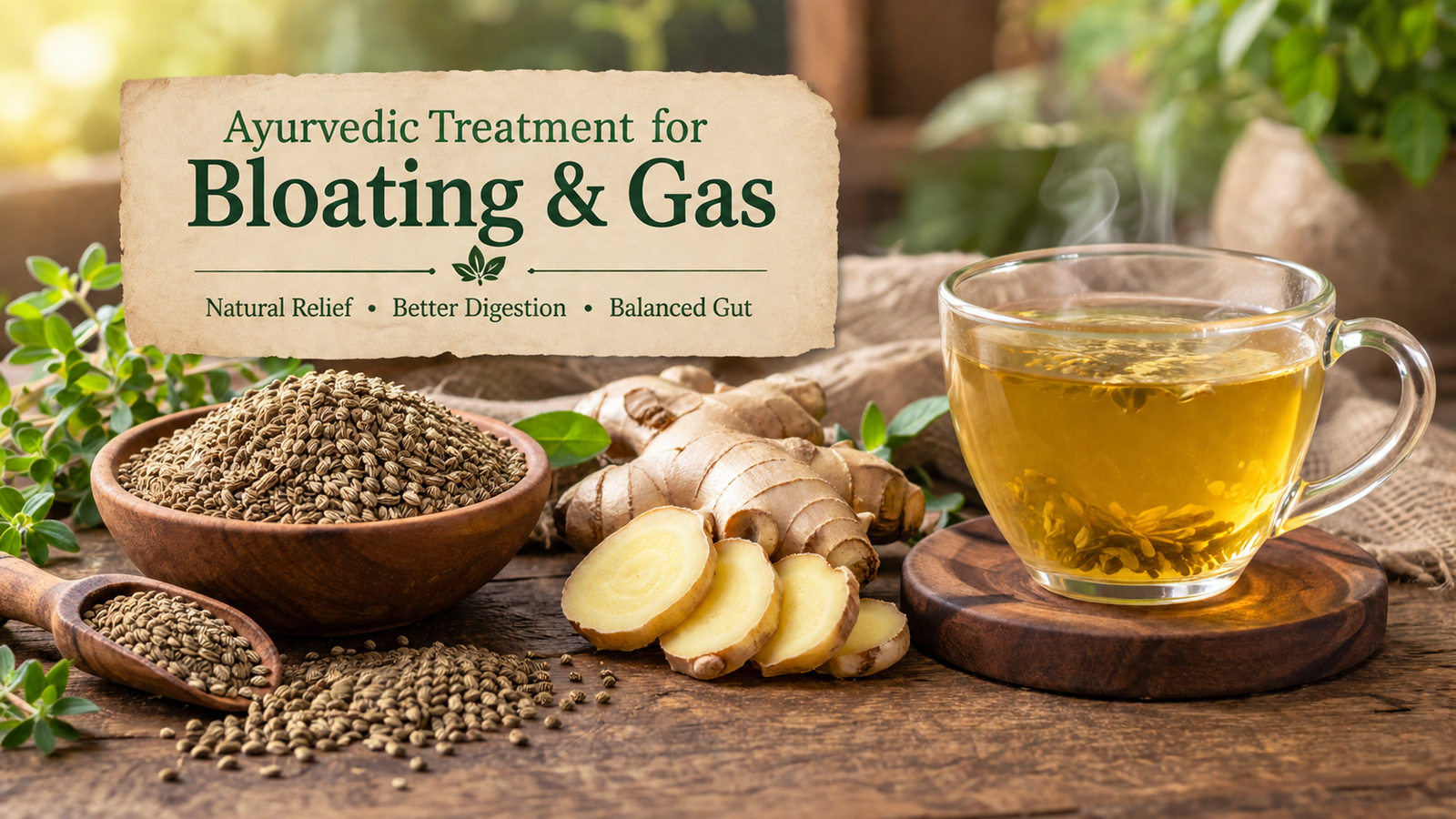
  • Ajwain (Carom seeds): Chew a pinch with a little salt after meals. This simple combination is one of Ayurveda’s fastest-acting remedies for immediate relief from gas.
  • Ginger tea: A warm cup after meals helps kindle Agni and reduces further gas formation.
  • Hing (Asafoetida): Just a pinch added to cooking — especially with legumes and lentils, which are naturally gas-forming — can prevent bloating before it even starts.
  • Jeera (Cumin) water: Boil cumin seeds in water and sip throughout the day to keep digestion steady and gentle.
  • Trikatu Churna: A classical blend of ginger, black pepper, and long pepper, known for stimulating sluggish digestion and helping the body process food more efficiently.

Key Panchakarma Therapies for Bloating and Gas

A well-planned panchakarma treatment for bloating and gas usually draws from the following therapies:

  • Virechana (Therapeutic Purgation): Especially effective when bloating is linked to excess Pitta or accumulated toxins in the intestines. It cleanses the digestive tract thoroughly, giving Agni a genuine reset.
  • Basti (Medicated Enema): Considered the single most effective Panchakarma therapy for Vata-related digestive issues — including gas, bloating, and irregular bowel movements — since Vata governs the colon and downward movement of gas and stool.
  • Udvartana (Herbal Powder Massage): Stimulates circulation and metabolism, indirectly supporting better digestion and reducing sluggishness that contributes to bloating.
  • Abhyanga (Warm Oil Massage) with Swedana (Herbal Steam): Often used as preparatory therapies before the main Panchakarma procedures, helping loosen deep-seated Ama so it can be eliminated more effectively.

Dietary Guidelines to Prevent Bloating

Alongside these remedies, a few consistent dietary habits make a significant difference in keeping bloating at bay:

  1. Eat warm, freshly cooked meals rather than cold, leftover, or raw-heavy food.
  2. Avoid carbonated drinks and heavily processed foods, both of which are known gas-formers.
  3. Chew your food thoroughly — digestion begins in the mouth, and rushing through a meal only adds to the digestive burden.
  4. Eat in a calm environment, away from stress or distraction, so your body can focus fully on digesting.

A Simple Daily Habit That Helps

One of the easiest additions to your routine is also one of the most effective: a short walk after meals. Just 10–15 minutes of gentle movement helps food move through the digestive tract smoothly and prevents gas from building up. If a walk isn’t possible, sitting in Vajrasana (a simple kneeling pose) for a few minutes after eating is a uniquely Ayurvedic practice believed to directly support digestion right after a meal.

The Takeaway

Bloating and gas may feel like minor, everyday annoyances, but they’re often your body’s way of signaling that Agni needs support. The good news is that relief doesn’t require anything drastic — just consistent, mindful ayurvedic treatment for bloating and gas through the right herbs, simple dietary discipline, and small daily habits like a post-meal walk.

Stick with these practices, and most people notice a dramatic reduction in bloating within just a few days — restoring a sense of comfort and lightness after every meal.

Chaitali

Share
Published by
Chaitali

Recent Posts

Osteoarthritis Ayurvedic Treatment

Osteoarthritis Ayurvedic Treatment: Restoring Joint Health Naturally Osteoarthritis (OA) is a degenerative joint condition caused…

6 days ago

Ayurvedic treatment for Dandruff

Ayurvedic Treatment for Dandruff: Understanding Darunaka and How Panchakarma Restores Scalp Balance Persistent white flakes…

1 week ago

Ayurvedic treatment for Psoriasis

Ayurvedic Treatment for Psoriasis: A Root-Cause Approach with Panchakarma Psoriasis is one of the most…

2 weeks ago

Ayurvedic treatment for Diabetes

Ayurvedic Treatment for Diabetes: Restoring Balance Beyond Blood Sugar Diabetes is one of the most…
3 weeks ago

Ayurvedic treatment for Arthritis

Ayurvedic Treatment for Arthritis: Natural Relief from Joint Pain Arthritis, known in Ayurveda as Sandhivata,…

4 weeks ago

Ayurvedic Treatment for Hair Fall

Ayurvedic Treatment for Hair Fall: Understanding Khalitya and How Panchakarma Restores Hair Health At my…

1 month ago